
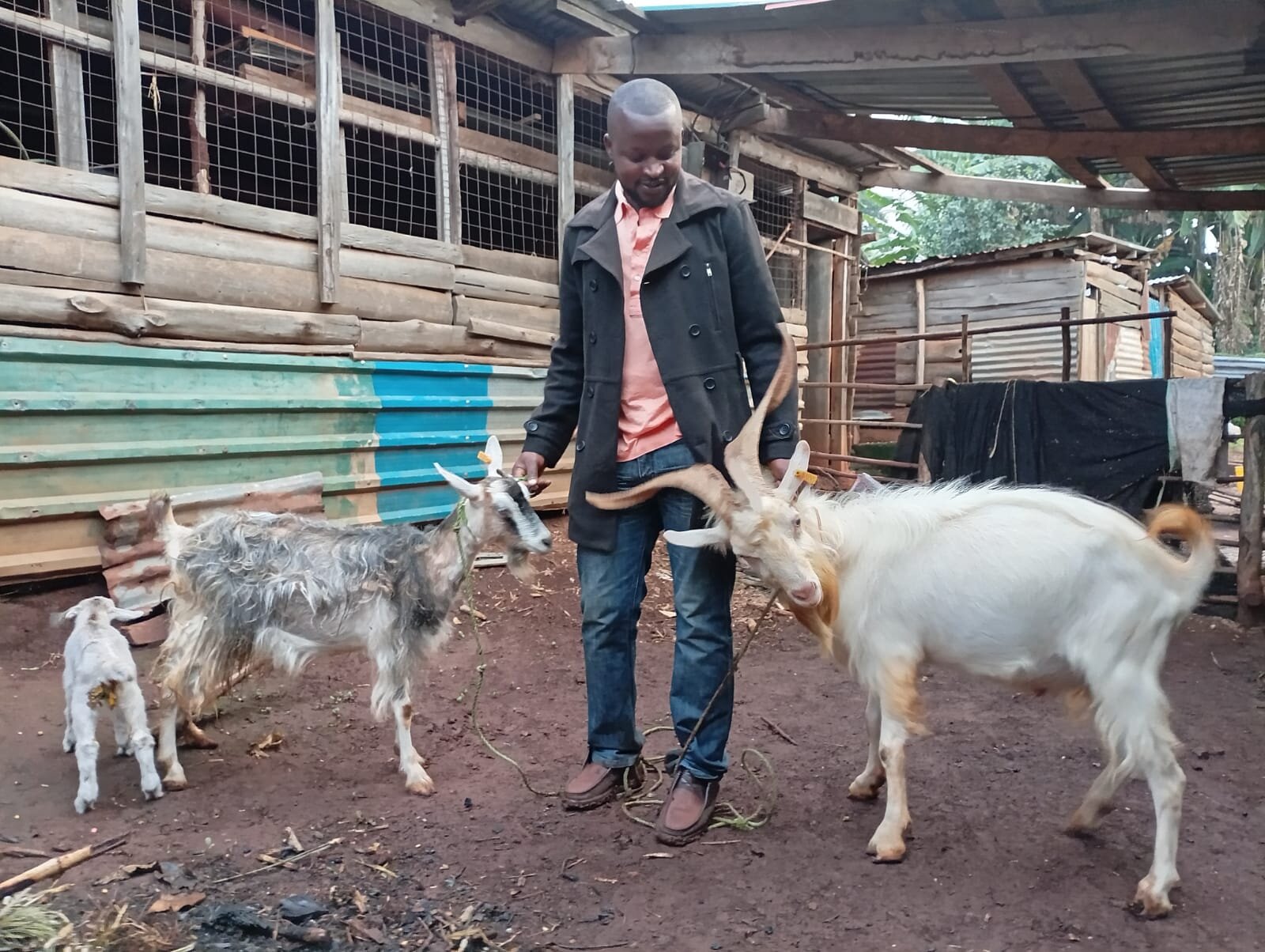
Gusii region is among the areas in the country that receives an adequate amount of rainfall every year. Many farmers from this region often engage in small-scale farming by growing crops such as maize, beans, avocados and bananas.
But in recent years, climate change has made these crops less productive. As a result, many residents have now started exploring other forms of diversification to maximize their returns. One such farmer is Saul Bosire, a 28-year-old teacher who is among the many professionals in Kenya that have turned to farming and are generating significant income that often exceeds their salaries.
‘Oboremi n'obotugi’ show visited Bosire at his parents’ home in Kabwori village, Nyaribari Chache Constituency, Kisii County to explore how he has found a fortune in this kind of livestock rearing that is significantly gaining traction in the country. We found him milking his goats, before he could transport the milk to Kisii Town where the product is of high demand.
Bosire said, goat farming as compared to other livestock ventures is of low-cost and if taken seriously and done in the right way, one can reap maximum benefits out of it. "I started rearing dairy goats in 2023. I discovered that within our vicinity, this venture had not developed yet goat milk was of high demand because of its medicinal value. Many researchers have found out that goat milk has some medicinal value and patients suffering from stubborn diseases are always looking for this milk."
"When I tried to ask patients of some common chronic disease, they told me they were buying a litre at Ksh. 300. This price is almost seven times that of cow milk. After deep thoughts, I said this was the path to take and I got off,” Bosire said adding that he ventured into this farming so that he can supplement what he earns for being a teacher.
He started with one dairy goat, which he sourced from a friend at a cost of Ksh. 25,000. He served the goat when it was due and luckily after a few months, it gave birth to She kids. Over the years, his flock increased and he now has 25 goats.
Out of this flock, Bosire has 10 goats that he is currently milking. 14 others are nearing the end of their gestation period. One is a buck. Each of the 10 goats that he is milking produces at least two litres of milk in a day. In a day, he gets 20 litres of milk and each goes at Ksh. 300. This means he makes Ksh. 6,000 in a day from his 10 goats that he is currently milking.
Bosire says after subtracting all other expenses, he saves around Ksh. 4,000 in a day. This loosely translates to Ksh. 120,000 in a month. At his farm, he rears three types of goats. They include the Toggenburg, The Alpines and the Saanen. The three types of goats are differentiated using their colours and their countries of origin.
Bosire wants to increase his herd even further for he can attest those goats are cheaper to rear but have good returns as compared to cattle. To succeed in this farming, Bosire suggests that there are some things that a farmer has to get right.
"First, make sure that the goat pen is well constructed. It Should be raised from the ground by about two meters to keep the goat free from fleas and ticks. This will reduce the cost of treating them,” Bosire added. He advises farmers, especially young graduates who have not gotten employment to consider this type of agribusiness.
"This is a venture that can be run by people who own large farms and those that do not have large farms, as long as they understand the principles needed to develop the project themselves," he said. A goat needs a small space when raising it, especially in a zero-grazing unit.
Bosire feeds his goats on napier and other bitter shrubs, which he says are easy to find. He advises farmers to always ensure that their goats are always healthy through regular deworming.
According to Geoffrey Nyakundi, a nutritionist working in Kisii County, goat milk contains essential nutrients such as calcium, magnesium and potassium. Children who have physical weakness and problems standing or walking are advised to use this milk.
According to Nyakundi, goat milk enables children to grow faster and have their brains develop faster. Every day, Bosire wakes up at 4.00 am and cleans his goat shed. He milks those that need to be milked, packs the milk in containers ready for the market, and feeds them before heading to the school where he teaches.