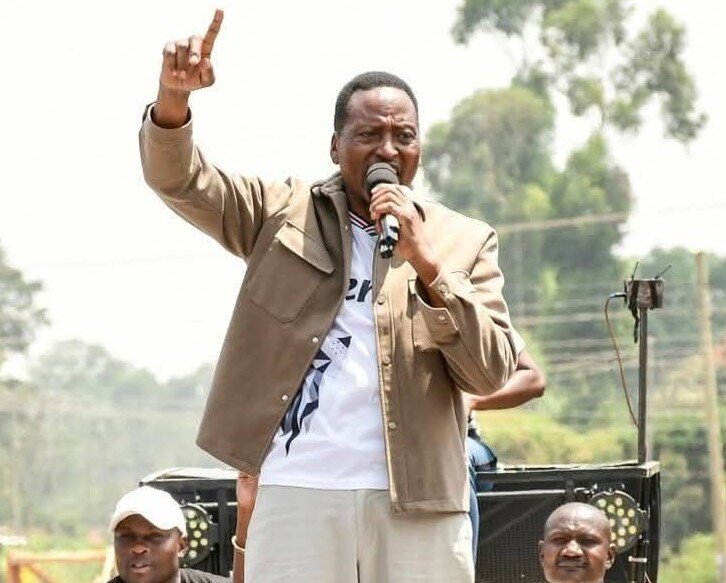
Senator Richard Onyonka has secured the treasurer position in the emerging Linda Mwananchi Movement, placing the Kisii politician at the heart of a new political outfit seeking to reshape Kenya’s opposition landscape ahead of the 2027 General Election.
However, his inclusion in the movement is likely to attract political scrutiny, particularly among supporters of former Interior Cabinet Secretary Fred Matiang’i, who have long regarded Onyonka as a strong political ally of the former powerful state official.
His new role raises questions about the evolving political relationships within the opposition and the extent to which established alliances will withstand the shifting political calculations ahead of the next election.
The Linda Mwananchi Movement is scheduled for launch today, October 30, following a legal battle by the team associated with Nairobi Senator Edwin Sifuna to secure approval to rename the Equitable Party under the new identity.
The development represents a significant step in the group's efforts to establish a political vehicle through which it can mobilize supporters and advance its political agenda.
Also featuring in the emerging leadership structure is Fredah Onduso, who has been appointed to the movement's digital leadership team. Her appointment underscores the importance the new outfit appears to attach to digital communication, online mobilization and public engagement in an increasingly competitive political environment.
The Onyonka Question: National Politics Versus Kisii Interests
What remains to be watched is how Onyonka will balance his national political outlook with the intricate dynamics of Kisii County politics.
As a senator representing Kisii County, Onyonka operates within a political environment shaped by local interests, community expectations and the ambitions of influential regional leaders.
His new responsibility as treasurer of a movement seeking a national political footprint could expand his influence beyond the county. However, it also presents a delicate political balancing act as he navigates national opposition alliances while maintaining his standing among Kisii voters.
The question is whether his association with the Linda Mwananchi Movement will strengthen his national profile without complicating his relationships with established political figures and competing interests back home.
His perceived association with Matiang’i adds another dimension to the unfolding political equation. How the two political figures relate as new alliances emerge could attract considerable attention, particularly as discussions about opposition leadership and the 2027 presidential contest gather momentum.
For Onyonka, the challenge may be to demonstrate that his new national responsibility complements, rather than undermines, his commitment to representing the interests of Kisii County.
A New Chapter for the Opposition?
The movement's launch comes at a time when opposition figures are exploring political arrangements that could influence the country's next electoral contest.
With Sifuna and his allies at the center of the initiative, the new outfit will be under pressure to demonstrate that it can move beyond its launch and build a credible political structure capable of attracting support across the country.
Onyonka's appointment as treasurer places him in a key organizational position, while Onduso's inclusion in the digital leadership team points to the role of communication and online mobilization in the movement's strategy.
Ultimately, the movement's political significance will depend on its ability to build a clear national agenda, manage competing ambitions and establish a lasting connection with voters.
For now, all eyes will be on how Onyonka navigates the delicate intersection of national opposition politics, his relationship with Matiang’i's political camp and the competing interests shaping Kisii County politics.
As the 2027 elections approach, that balancing act could become one of the defining tests of his new political chapter.