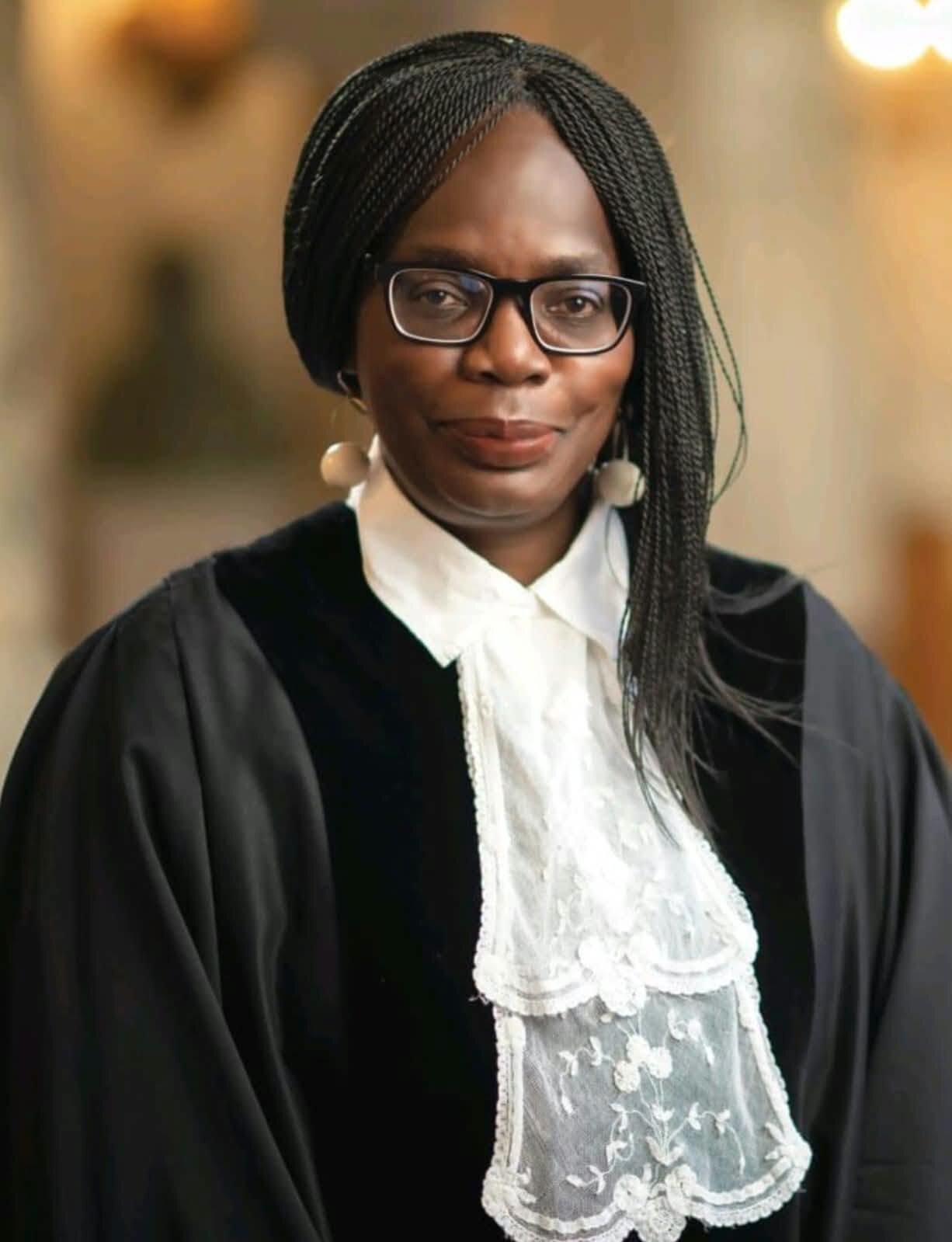
Kenyan jurist Professor Phoebe Okowa has been re-elected to the International Court of Justice (ICJ) for a full nine-year term, securing her seat after crucial votes at the United Nations Security Council and General Assembly on Tuesday, November 3, 2026. Her new term will officially commence on February 6, 2027, and run until February 2036.
Election Results & Diplomatic Campaign
Professor Okowa won the contested seat against Sierra Leone’s Professor Charles Chernor Jalloh. The election concluded after a competitive process where she secure
UN Security Council: 8 votes (vs. Jalloh's 7)
UN General Assembly: 106 votes (vs. Jalloh's 79)
The victory followed an intensive diplomatic campaign led by Kenya's Principal Secretary for Foreign Affairs, Korir Sing’Oei. Protracted voting was avoided in the later stages when Sierra Leone, South Korea, and Ecuador withdrew their candidatures after the third round. Okowa will serve on the 15-member bench alongside newly elected judges from the UK, France, Singapore, and Jordan.
Background and Context
Okowa was initially elected to the ICJ in November 2025 to complete the remainder of the term left by Somali judge Abdulqawi Ahmed Yusuf, who resigned. That transitional term expires on February 5, 2027. Her successful re-election now guarantees Kenya representation on the global court for nearly another decade.
Profile of Professor Phoebe Okowa
Current Academic Role: Professor of Public International Law at Queen Mary University of London.
Trailblazing Milestones:
o The first Kenyan ever to serve as an ICJ judge.
o The first African woman elected to the UN International Law Commission.
Expertise: Highly regarded expert, counsel, and adviser in complex international legal disputes.
About the International Court of Justice (ICJ)
Role: The principal judicial organ of the United Nations, tasked with settling legal disputes between member states and offering advisory opinions to authorized UN bodies.
Location: Headquartered in The Hague, Netherlands.
Structure: Composed of 15 independent judges who serve in their personal capacity rather than representing their home nations. Elections require an absolute majority in both the UN General Assembly and Security Council.
Distinction: Separate from the International Criminal Court (ICC), which handles criminal prosecutions of individuals.