
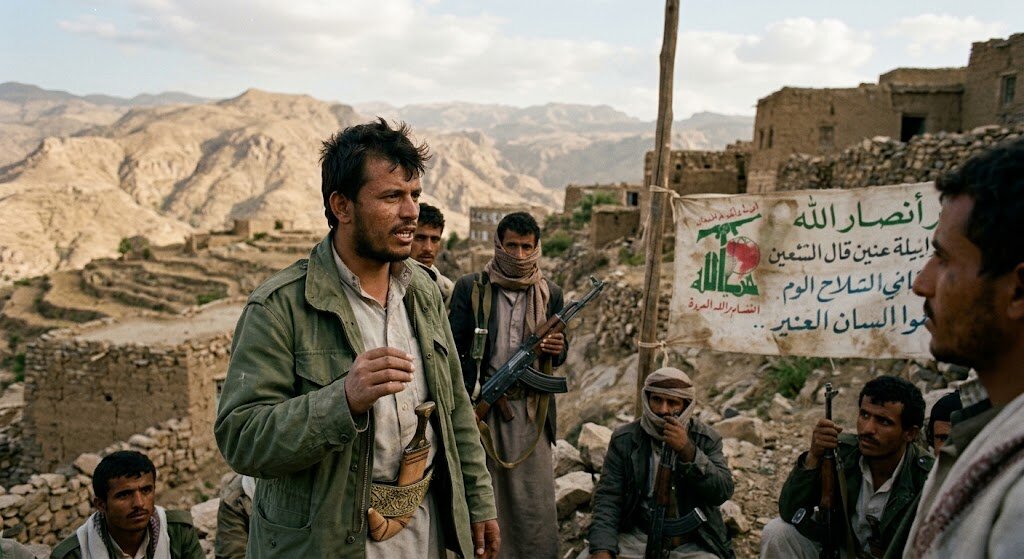
The origins of the Houthi movement trace back to northern Yemen, emerging primarily as a religious and cultural revivalist network before evolving into a formidable military and political force.
The Zaidi Awakening and the Sa'dah Wars (2004)
The movement finds its roots in the Believing Youth (Shabab al-Muminin) organization, established in the early 1990s by the Badreddin al-Houthi family and other clerics. Initially, the group focused on educational and cultural revival for followers of Zaydism, a branch of Shia Islam that forms a significant minority in northern Yemen (particularly in the Sa'dah governorate) and historically ruled North Yemen for nearly a millennium until the 1962 revolution.
By the early 2000s, under the leadership of Hussein Badreddin al-Houthi, the group's rhetoric took on a sharp anti-Western and anti-government tone, criticizing the Yemeni government's alignment with the United States. This political defiance brought them into direct confrontation with then-President Ali Abdullah Saleh. In 2004, a government attempt to arrest Hussein al-Houthi sparked an armed rebellion in Sa'dah. Hussein was killed by government forces later that year, but the insurgency persisted, leading to a series of intermittent conflicts known as the Sa'dah Wars (2004–2010) that militarized the region and hardened the movement's resolve. Following Hussein's death, leadership passed to his brother, Abdul-Malik al-Houthi, who commands the group to this day.
The 2011 Arab Spring and the 2014 Civil War
The turning point for the movement's national ascent came during the 2011 Arab Spring uprisings, which destabilized President Saleh's decades-long regime. The Houthi movement participated in the anti-government protests and subsequently rejected the Gulf-brokered political transition deal, arguing it failed to address systemic disenfranchisement.
Capitalizing on widespread public dissatisfaction with the transitional government under President Abdrabbuh Mansur Hadi and leveraging tactical alliances, the Houthi forces launched a rapid territorial offensive. In September 2014, Houthi fighters swept out of their northern strongholds and successfully seized control of the capital, Sanaa, effectively ousting the internationally recognized government and plunging the nation into a protracted civil war.
This domestic power grab drew a massive regional response in March 2015, when a Saudi Arabia-led military coalition intervened to restore the ousted government, transforming the conflict into a devastating regional war that reshaped the geopolitical landscape of the Arabian Peninsula.